Crown Bottle Caps: Pry-Off vs Twist-Off Caps Explained
Crown Bottle Caps: Everything Beverage Producers Need to Know About Pry-Off, Twist-Off, and Custom Caps
Crown bottle caps are one of the most widely used closures in the beverage industry. From craft beer and soda to sparkling beverages and specialty drinks, crown caps provide a reliable, cost-effective way to seal bottles while protecting freshness and carbonation.
Although they look simple, crown caps are carefully engineered closures made from metal shells, specialized liners, and precise crimping technology. Small differences in cap style, liner material, or manufacturing process can significantly affect how well a beverage stays fresh, how it opens, and how the product is perceived by customers.
This guide covers how crown bottle caps work, the differences between pry-off and twist-off caps, how liner selection affects shelf life, and how custom crown caps help beverage brands stand out.
Why Many Craft Brands Prefer Pry-Off Caps
Pry-Off vs Twist-Off: Which Should You Choose?
Crown Cap Liners: How They Affect Freshness and Shelf Life
Custom Crown Caps for Branding
Crown Cap Quality Control and Product Safety
What Is a Crown Bottle Cap?
A crown cap, sometimes called a crown cork, is a metal bottle closure designed to crimp around the lip of a glass bottle to create a tight seal. The design dates back to 1892, when William Painter patented the first crown cork in Baltimore. His invention solved a problem the bottling industry had struggled with for years: how to keep carbonated beverages sealed reliably without reusable cork stoppers. The basic concept worked so well that modern crown caps still follow the same core structure over a century later.
Every crown bottle cap has three key components that work together to create a secure seal. The metal shell, usually made from tin-plated steel or aluminum, provides the rigid outer structure. The corrugated edges (the "crowns") grip the bottle lip when the cap is crimped into place during bottling. And the internal liner sits between the metal and the glass, forming an airtight seal that keeps oxygen out and carbonation locked in.
This combination of simplicity and effectiveness is why crown caps are used around the world for beer, soft drinks, energy drinks, kombucha, sparkling beverages, and even some specialty wines. Their popularity comes down to reliability, affordability, and seamless compatibility with automated bottling lines at nearly every scale of production.
Standard Crown Cap Sizes
Most crown caps fall into two primary size categories, and choosing the correct bottle cap size is essential for maintaining a proper seal and ensuring compatibility with your bottling equipment.
26mm Crown Caps
The 26mm crown cap is the global standard for most beverage bottles. It is the go-to closure for beer bottles, soda bottles, craft beverages, and standard glass bottling lines. Because the 26mm size is so widely adopted, nearly all commercial bottling equipment is designed around it, which makes sourcing caps, bottles, and capping machinery straightforward for producers of any size.
29mm Crown Caps
The 29mm crown cap is designed for larger bottles or beverages with higher internal pressure. You will find these caps on champagne-style bottles, large format craft beers, and specialty fermentation products like traditional method sparkling wines. The slightly larger diameter provides additional sealing surface area, which helps contain the higher carbonation levels common in these products. If you are bottling in champagne or Belgian-style bottles, confirm that your capper and caps are rated for the 29mm specification before production.
Pry-Off Crown Caps
How Pry-Off Caps Work
Pry-off caps require a bottle opener to remove. The opener leverages the metal edges to lift the cap away from the bottle lip. These caps use a dual-lip sealing structure inside the liner, which grips both the inner and outer surfaces of the bottle's neck finish. This dual contact point is what gives pry-off caps their reputation for a strong, consistent seal.
Craft breweries, import beer brands, and premium beverage companies are the most common users of pry-off crown caps.
Why Many Craft Brands Prefer Pry-Off Caps
Pry-off caps carry an association with tradition and quality that many craft brewers deliberately lean into. Opening a bottle with an opener is part of the ritual, and it signals to the customer that this is a product made with intention rather than mass-market convenience.
Beyond perception, there are practical reasons craft producers choose pry-off caps. The crimping pressure used during bottling creates a strong mechanical seal. Pry-off caps are also compatible with a wider range of advanced liner types, including PVC-free and oxygen barrier options, which gives producers more flexibility when it comes to protecting the product inside the bottle. And from a cost standpoint, pry-off caps and the bottles designed for them tend to be less expensive, which matters for smaller operations working within tight margins.
Twist-Off Crown Caps
How Twist-Off Caps Work
Twist-off crown caps are designed to be opened by hand. The bottle neck has shallow threads molded into the glass, and the cap itself is made from a slightly softer metal that conforms to those threads during the capping process. To open, the consumer simply twists the cap and it unscrews.
These caps are widely used by large beverage manufacturers, mass-market beer brands, and soft drink companies where consumer convenience is a top priority.
Benefits of Twist-Off Caps
The main advantage of twist-off caps is ease of use. No bottle opener required, no fumbling at a barbecue or a tailgate. For consumers who are not beer enthusiasts or homebrewers, a twist-off cap is familiar and frictionless.
Twist-off caps also perform well on high-volume bottling lines. The capping process is fast and efficient, which matters when you are running tens of thousands of bottles per hour. Although earlier versions of twist-off caps had a reputation for weaker seals, modern liner technology has significantly closed that gap. Today's twist-off caps, when paired with the right liner and properly calibrated equipment, deliver solid sealing performance for most standard beverage applications.
Pry-Off vs Twist-Off: Which Should You Choose?
This is one of the most common questions beverage producers face when specifying their packaging, and the answer depends on your product, your equipment, and how your customers interact with your brand.
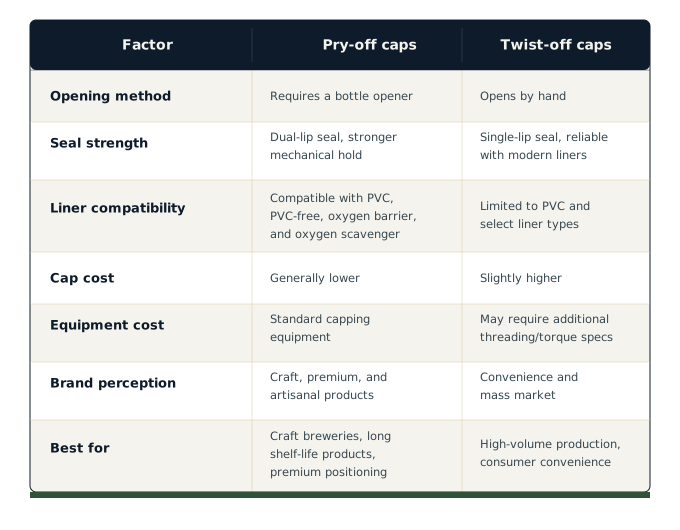
For most craft and specialty producers, pry-off caps offer the best combination of seal integrity, liner flexibility, and brand positioning. For large-scale producers prioritizing speed and consumer convenience, twist-off caps are the practical choice. Some breweries have even switched between the two over the years based on evolving priorities around freshness, cost, and customer feedback.
Crown Cap Liners: How They Affect Freshness and Shelf Life
The liner inside the cap is the unsung hero of bottle sealing. It is the component that actually forms the seal between the metal cap and the glass bottle rim, and the liner you choose can have a measurable impact on how long your beverage stays fresh.
PVC Liners
PVC (polyvinyl chloride) liners have been the industry standard for decades. They offer strong mechanical sealing, reliable performance across a wide range of beverage types, and low per-unit cost. For producers who need a proven, no-surprises liner at scale, PVC remains a dependable option. The main drawback is that PVC has come under increasing scrutiny from both regulators and consumers who are looking for alternatives due to environmental and food safety concerns.
PVC-Free Liners
Many crown cap manufacturers now offer PVC-free liner options made from polyethylene or EVA (ethylene-vinyl acetate) compounds. These liners are gaining traction among producers who want to align with sustainability initiatives, meet evolving food safety standards, or comply with regional regulations that restrict PVC in food-contact packaging. PVC-free liners are typically available for pry-off caps and deliver comparable sealing performance in most applications, though it is worth testing them with your specific beverage and bottling setup before committing to a full production run.
Oxygen Barrier Liners
Oxygen is the enemy of beverage freshness, especially for beer. Even small amounts of oxygen ingress over time can cause off-flavors, staling, and a noticeable decline in product quality. Oxygen barrier liners are designed to reduce the amount of oxygen that can pass through the cap and into the bottle after sealing. They create a passive barrier that slows oxygen transmission, helping preserve flavor and extend shelf life. For producers who are distributing product over longer timelines or shipping across wide geographic areas, an oxygen barrier liner can make a meaningful difference in how the product tastes when the customer finally opens it.
Oxygen Scavenging Liners
Oxygen scavenging liners take protection a step further. Rather than simply blocking oxygen from entering the bottle, these liners contain special compounds that actively absorb oxygen molecules trapped in the headspace during the capping process. They continue absorbing residual oxygen over time, which means they are not just preventing new oxygen from getting in but also removing the oxygen that was already there at the point of sealing.
This makes oxygen scavenging liners the top choice for products that are highly sensitive to oxidation, such as hop-forward IPAs, lagers with delicate flavor profiles, and any beverage intended for extended shelf life or long-distance distribution. One important note: oxygen scavenging liners begin absorbing oxygen as soon as they are exposed to moisture or air, so proper storage is critical. Keep them sealed in their original packaging until you are ready to use them, and avoid exposing them to sanitizers that could activate the scavenging compounds prematurely.
Custom Crown Caps for Branding
One of the biggest advantages of crown caps is how easily they can be customized, and for beverage brands in a crowded market, the cap is real estate that often goes underused.
Custom printed bottle caps can carry your brand logo, product colors, batch identification codes, promotional messaging, or even collectible designs that encourage repeat purchases. The printing and finishing options available today include lithographic printing for detailed multi-color artwork, embossed metal designs that add a tactile element, matte or gloss finishes for different visual effects, and color-coded caps to help retailers and consumers quickly distinguish between product variations.
The process for ordering custom crown caps typically starts with selecting your cap size and style (pry-off or twist-off), choosing a liner type, and submitting your artwork. Most manufacturers require minimum order quantities for custom prints, which can range from 50,000 to 100,000+ caps depending on the supplier. If you are a smaller producer exploring custom options for the first time, ask your supplier about stock caps in specific colors as a lower-commitment starting point. Color-coded caps with a simple logo can go a long way toward building brand recognition without the minimums required for fully custom lithographic prints.
Crown Cap Quality Control and Product Safety
Crown caps play an important role in protecting beverage quality from the point of sealing all the way to the moment the customer opens the bottle. A properly sealed cap maintains carbonation, prevents oxygen contamination, preserves flavor stability, and provides visible tamper evidence that the product has not been opened or compromised.
But none of that happens automatically. Quality control during the bottling process is essential. The crown cap crimping process needs to be consistently calibrated so that every cap seats with the right amount of pressure on every bottle. Too little crimping and the seal will not hold. Too much and the liner can deform, which compromises the barrier. Even the best cap and liner combination cannot perform properly if the capping equipment is out of spec.
Producers should inspect crimped caps regularly during production runs, check for consistent skirt compression, and verify that the liner is making full contact with the bottle rim. If you are running a new cap or liner type for the first time, it is worth doing a small test batch and checking seals before scaling up.
Why Crown Caps Are Still the Industry Standard
Despite the growth of cans, alternative closures, and new packaging technologies, crown caps remain the preferred closure for an enormous range of bottled beverages. The reasons are straightforward: excellent pressure resistance, reliable sealing performance, low cost per unit, full compatibility with high-speed bottling lines, and strong branding opportunities through custom printing.
From large beverage manufacturers running hundreds of thousands of bottles a day to small craft producers hand-capping batches in a garage, crown caps deliver a dependable balance of performance, flexibility, and simplicity that no other bottle closure has managed to displace.
Frequently Asked Questions
What is the difference between a pry-off and twist-off bottle cap? Pry-off caps require a bottle opener and use a dual-lip seal for a stronger mechanical hold. Twist-off caps open by hand using threads on the bottle neck and a single-lip seal. Pry-off caps are more common with craft breweries, while twist-off caps are favored by high-volume producers for consumer convenience.
What size crown cap do I need for my bottles? Most standard beer and soda bottles use a 26mm crown cap, which is the global industry standard. If you are bottling in champagne-style or large format bottles, you will likely need a 29mm crown cap. Always verify the neck finish specification of your bottles before ordering caps.
Are PVC-free bottle cap liners as effective as PVC? In most applications, yes. PVC-free liners made from polyethylene or EVA compounds offer comparable sealing performance. They are increasingly preferred for food safety and sustainability reasons. It is still a good idea to test them with your specific product and bottling setup before committing to large orders.
What is the difference between oxygen barrier and oxygen scavenging liners? Oxygen barrier liners passively block oxygen from entering the bottle through the cap. Oxygen scavenging liners go further by actively absorbing oxygen that is already trapped in the headspace at the time of sealing, plus any that tries to enter over time. Scavenging liners offer the highest level of protection for oxygen-sensitive beverages.
Can I get custom printed crown caps for small batch runs? Most manufacturers require minimum orders of 50,000 to 100,000+ caps for fully custom lithographic prints. If you are a smaller producer, consider starting with stock-colored caps or simple one-color prints, which often have lower minimums. Some suppliers also offer short-run digital printing options.
What is a crown cork? Crown cork is another name for a crown bottle cap. The term dates back to 1892 when William Painter patented the original design in Baltimore. You will see "crown cork" used frequently in European markets and in technical packaging specifications. It refers to the same closure.
